If you are researching resin bouquet preservation, you have probably seen the photos: transparent blocks with flowers suspended inside, geometric shapes, pieces that look straight out of a gallery. It is easy to see the appeal.
Before we continue, a note of honesty: our studio does not work with resin (we explain why below). Even so, this guide aims to answer, rigorously, the questions you should ask any resin studio, because an informed decision always beats a surprise one year later.
What resin preservation is
Epoxy resin is a liquid polymer that hardens around the flowers, encapsulating them in a transparent block. The flowers are dried first (usually in silica or air-dried) and then positioned inside a mould, where the resin is poured in layers.
The result is three-dimensional: the flowers keep their volume, suspended inside the piece.
Formats and prices in Portugal
Portuguese resin studios typically offer:
- Decorative blocks (hexagonal, circular, rectangular, heart-shaped): roughly between €125 and €175, depending on size and shape
- Frames with resin: from around €70 up to €250 or more
- Small pieces (jewellery, candle holders, bookmarks): between €10 and €95
- Several studios set a minimum order value around €150
For comparison: a botanical pressing frame in Portugal typically costs between €300 and €500, depending on the frame size. They are different products: a resin block is a shelf piece; the frame is large-format wall art.
Deadlines: the part that catches people off guard
With resin, as with pressing, the critical factor is how quickly the flowers are handed in. Most studios ask for the flowers within 2 to 3 days of the event, because drying must start before decomposition becomes visible.
If your wedding was longer ago, ask before giving up: in some cases the flowers can still be worked with, and there is also the option of recreating the bouquet with identical fresh flowers.
What resin does well
- Real volume: the flowers keep their three-dimensional shape, which pressing does not
- Small, practical formats: ring holders, jewellery, desk pieces
- Lower entry price: a small block costs less than a large frame
- Immediate visual impact: freshly made, a resin piece photographs beautifully
The questions you should ask a resin studio
These are the questions whose answers separate good work from disappointment:
- "Which resin do you use, and does it have a UV stabiliser?" All epoxy resin yellows with light exposure; UV-stabilised resins yellow more slowly, but they still do.
- "Can you show me photos of your pieces that are 3 or more years old?" Photos of freshly made pieces say nothing about durability. This is the decisive test.
- "What happens if the piece yellows or the flowers darken?" Resin cannot be opened or repaired: whatever happens inside is final.
- "How do you prepare the flowers before encapsulating?" Poorly dried flowers create visible internal moisture over time.
Why we chose not to work with resin
At our studio we decided to work exclusively with botanical pressing, and the reason is simple to explain:
- Resin is a petrochemical plastic: not biodegradable, not recyclable, and curing releases volatile compounds
- Flowers inside resin keep degrading; the material slows the process but does not stop it, and there is no way to intervene afterwards
- Durability at 20 or 30 years is uncertain, and the material itself yellows
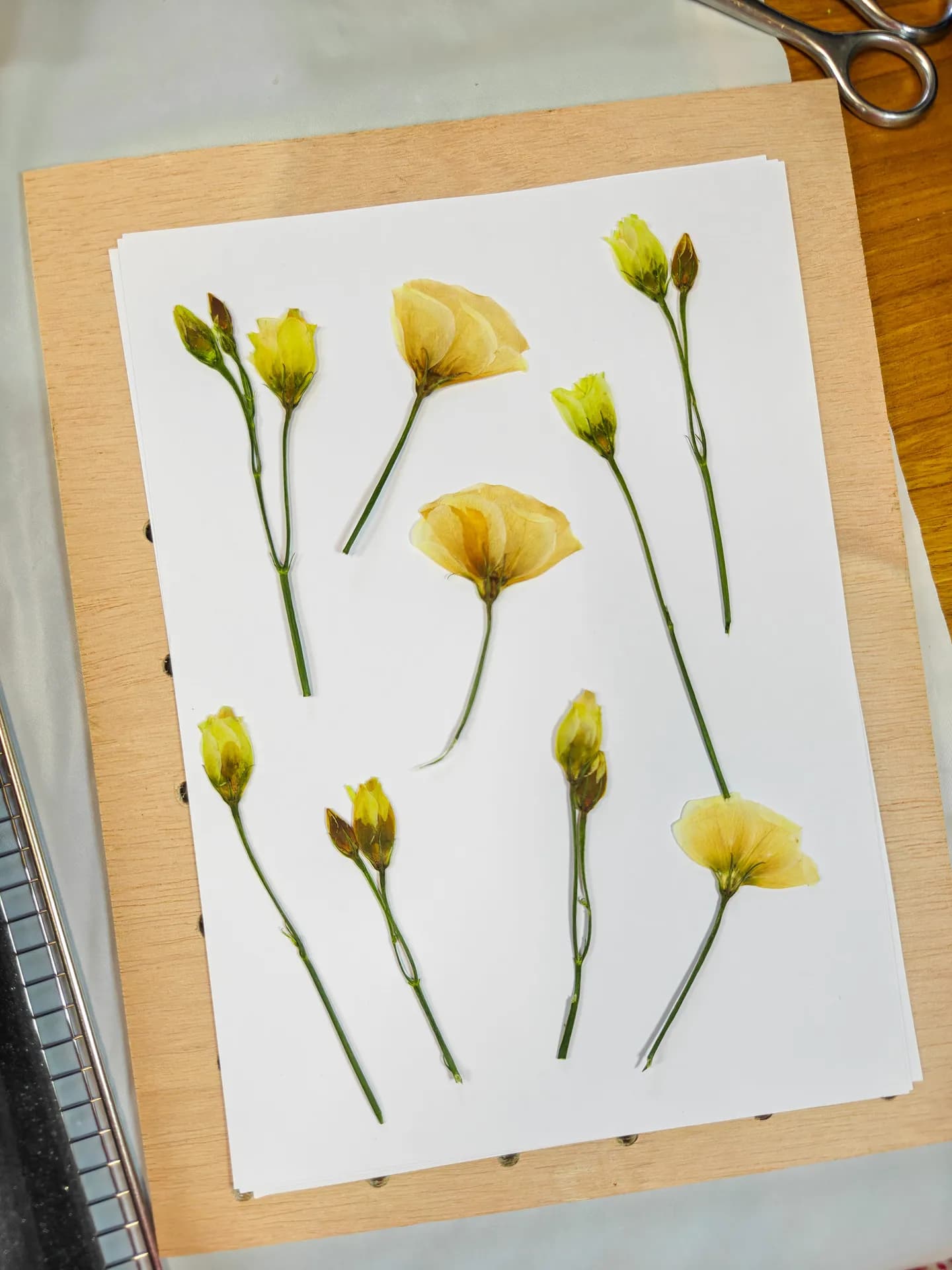
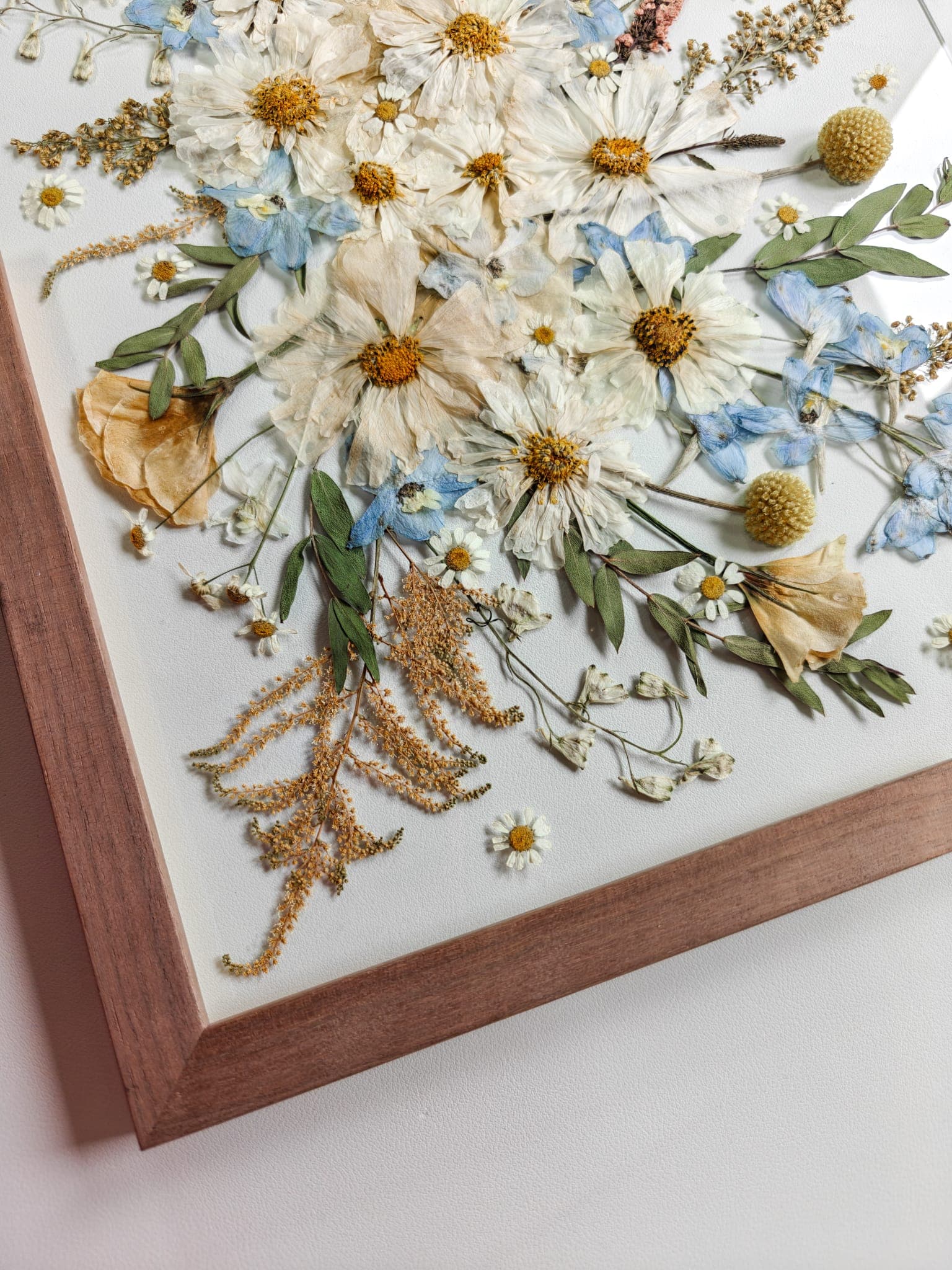
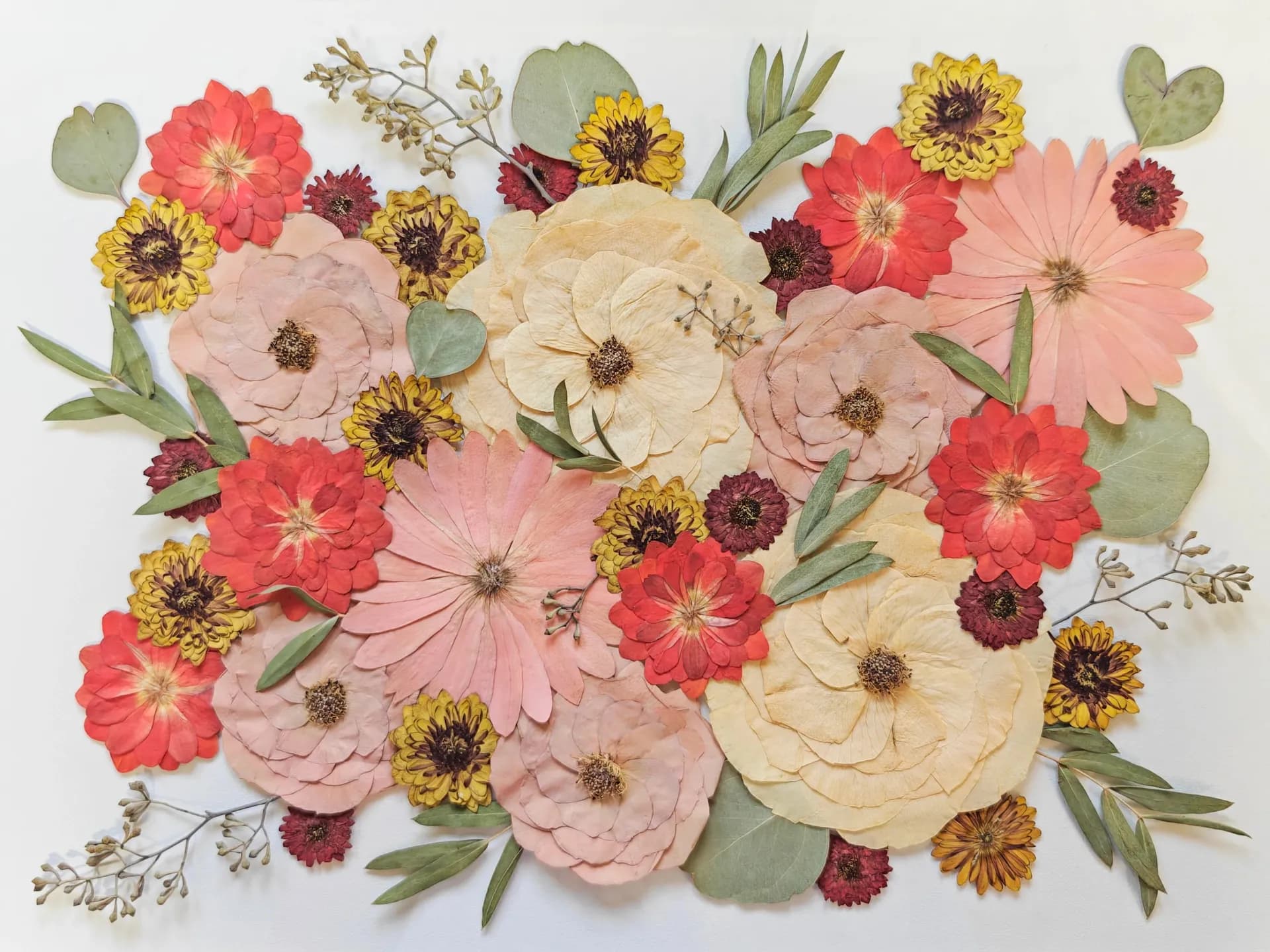
- Pressing, by contrast, has a proven record: herbarium specimens exist that are over 300 years old, and a frame can be reopened and restored if it is ever needed
We wrote a detailed comparison of the two methods, with the pros and cons of each: Resin or botanical pressing? The differences nobody tells you.
In short
| Resin | Botanical pressing | |
|---|---|---|
| Result | 3D shelf block | Wall frame |
| Typical price in Portugal | €125 to €250+ | €300 to €500 |
| Proven durability | Uncertain; the material yellows | Centuries, with UV glass and good materials |
| Repairable | No | Yes |
| Environmental impact | Petrochemical plastic | Natural process, no chemicals |
If a small, three-dimensional format is what you are after, resin can make sense; choose a studio that answers the four questions above well. If you want a wall piece made to last decades, with natural materials, see how our process works or request your booking.